Why a Tankless Water Heater Needs Regular Maintenance
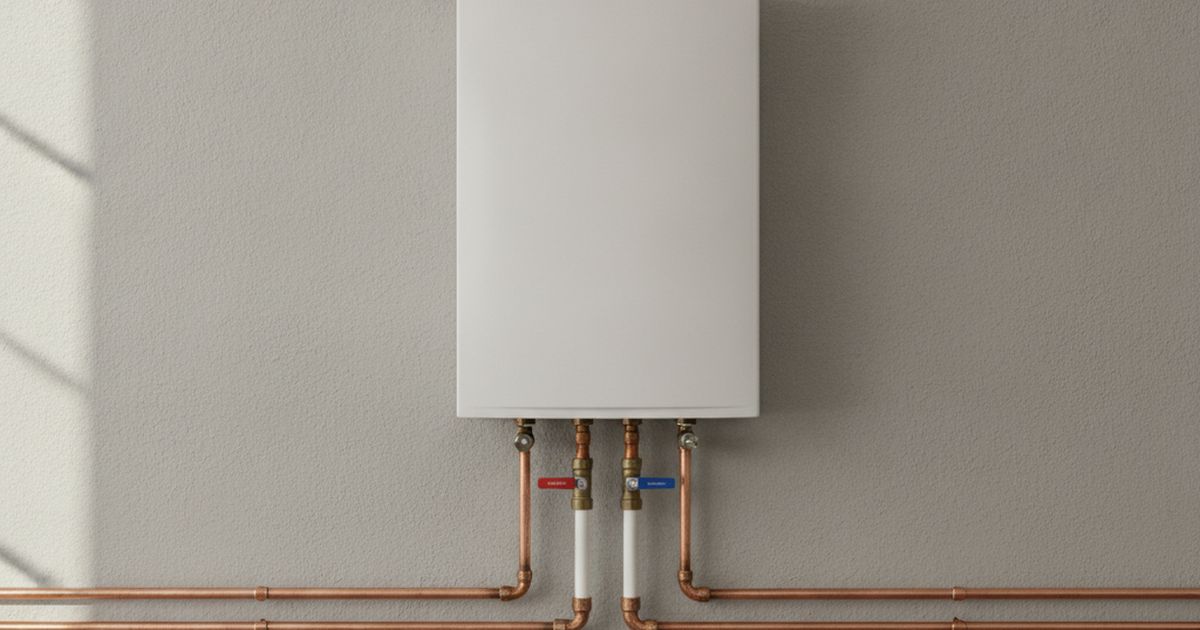
A tankless unit heats water as it passes through a compact heat exchanger instead of storing it in a tank.
That design is what gives you continuous hot water, but it also means every gallon you use flows through small passages that get very hot.
When hard water is heated, calcium and magnesium come out of solution and stick to hot metal surfaces as scale. In a tank heater that scale mostly settles to the bottom as sediment.
In a tankless heater it coats the inside of the heat exchanger, where it insulates the metal from the water.
The burner or element has to work harder to reach the same temperature, and in time the unit can overheat, throw error codes, or shut itself down.
How Often to Flush: The Manufacturer Guidance
Navien, one of the major tankless manufacturers, recommends descaling a tankless water heater at least once a year.
It also notes that the higher the mineral content of your water, the higher the set water temperature, and the more hot water your home uses, the more often you will need to descale.
In practice that means:
- Once a year is the baseline for most Fairfield and Solano County homes. - More than once a year may be needed in large households, homes with the temperature set high, or homes on harder water without a softener.
- Check your owner's manual and warranty. Most manufacturers list descaling in their maintenance schedule, and scale damage to the heat exchanger may not be covered if the unit was never serviced.
Water hardness varies across Solano County depending on which water supplier serves your street. Your city's annual water quality report lists the hardness of your supply, which is a useful number to have when deciding how often to schedule service.
Signs Your Tankless Water Heater Needs Descaling
Scale builds up gradually, so the early signs are easy to miss. Watch for:
- Hot water that swings between hot and lukewarm during a shower, even when nobody else is using water - Longer waits for hot water than when the unit was new - Lower hot water flow at fixtures that used
to run strong - An error code on the display related to overheating, flow, or scale (the code list is in your manual) - New noises, such as ticking or rumbling, from the unit while it runs - **Higher gas
or electric bills** without a change in how much hot water you use
Any one of these on a unit that has gone more than a year without service is a strong hint that it is time to flush it.
What a Professional Tankless Flush Involves
A descaling service is more than running water through the unit. A typical visit looks like this:
- 1Shut down power and gas to the unit and close the isolation valves on the hot and cold lines.
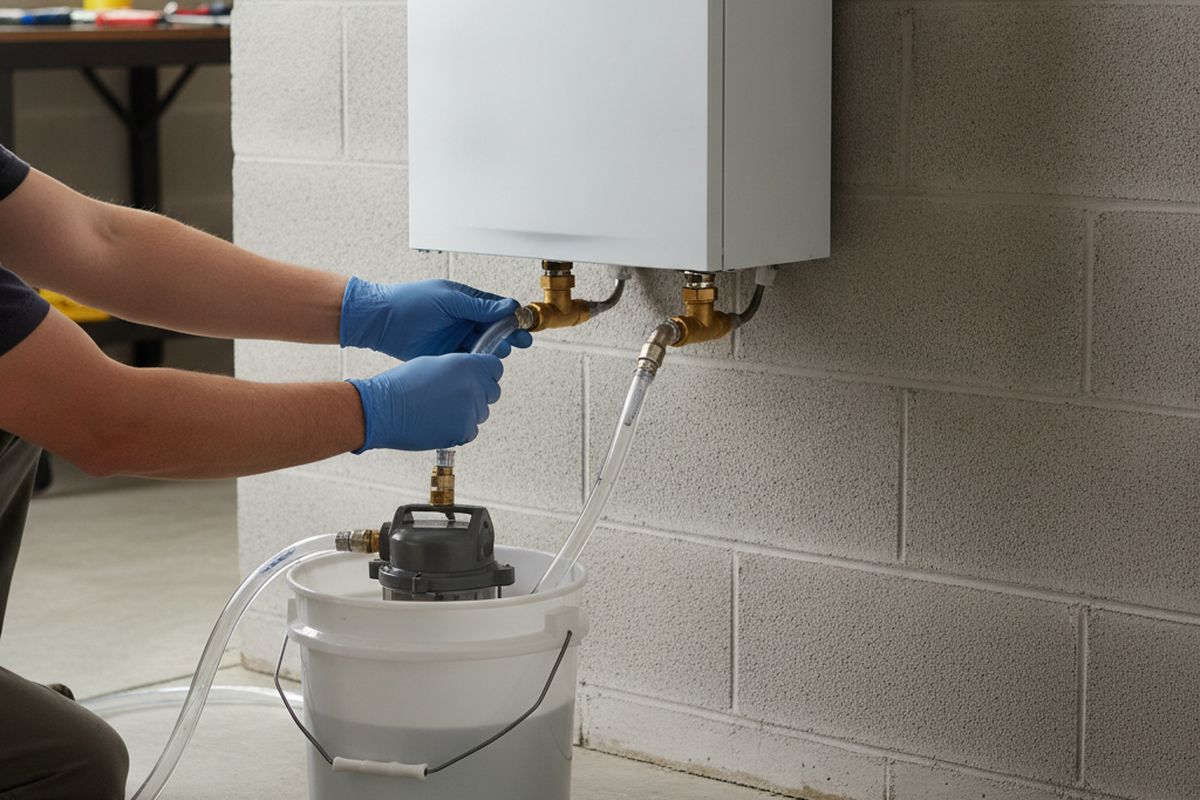
- 2Connect a circulation pump and hoses to the service ports on those valves.
- 3Circulate a descaling solution through the heat exchanger for the time the manufacturer specifies to dissolve the mineral layer.
- 4Flush with clean water until the solution is fully rinsed out.
- 5Clean the inlet water filter screen, which traps grit and debris before it reaches the heat exchanger.
- 6Check the venting, gas connection, condensate line on condensing units, and pressure relief valve, then restart the unit and confirm it reaches temperature.
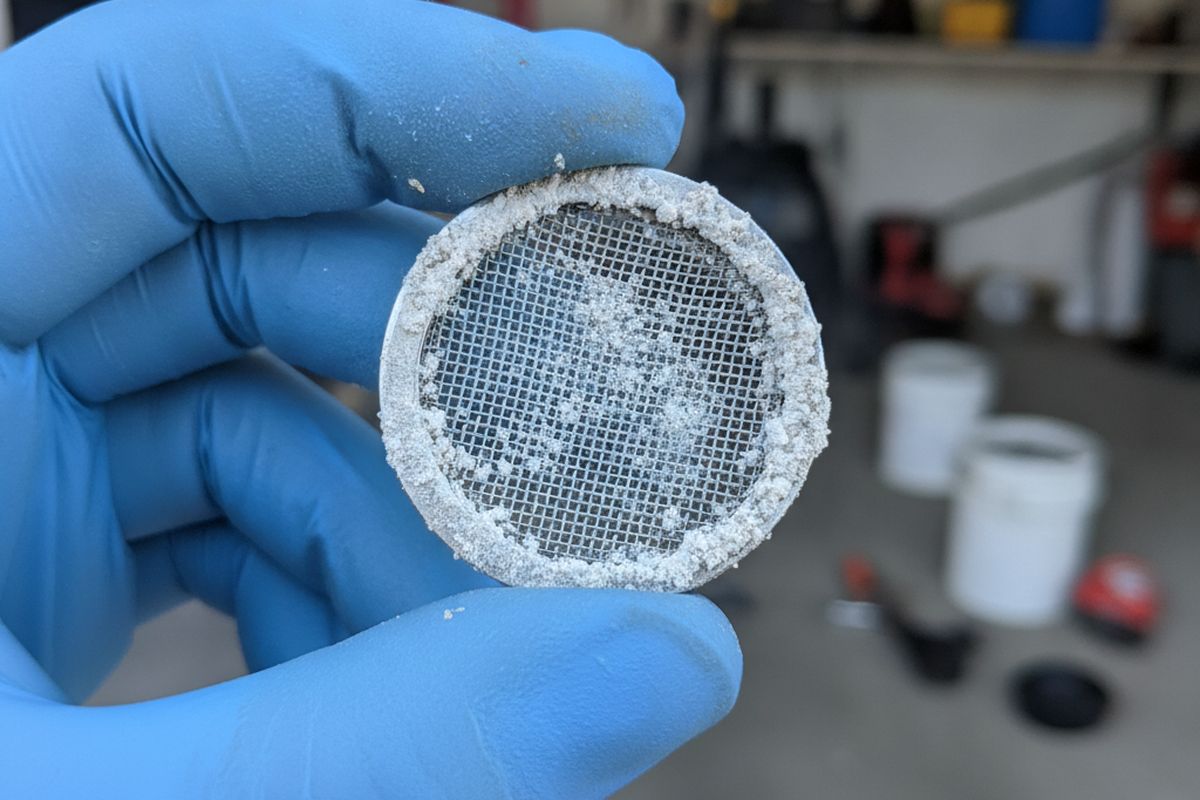
Many homeowners can handle the filter screen themselves between visits. The full flush is a reasonable DIY job only if your unit already has service valves installed and you are comfortable working near gas and electrical connections.
If the valves are missing, the flush is a good time to have them added so future maintenance is quicker.
Should You Add a Water Softener?
If your water is hard and your tankless unit needs descaling more than once a year, ask about scale protection.
Some manufacturers offer scale-prevention cartridges designed for tankless units, and a whole-home softener reduces scale on every fixture in the house. Either way, keep the annual flush on the calendar; treatment slows scale down rather than eliminating maintenance.
Repair or Replace an Older Tankless Unit
Regular descaling is the single biggest factor in how long a tankless heater lasts.
A unit that keeps showing the same error after a flush, leaks from the heat exchanger, or has been out of warranty for years may be due for repair or replacement.
If you are weighing a new tank or tankless system, our water heater replacement cost guide for Fairfield explains what affects the price, and our water heater replacement and installation service covers both options.
If your problem is a conventional tank that has stopped heating rather than a tankless unit, start with our guide to why a water heater stops heating.
Tankless Water Heater Service in Fairfield
C&C Plumbing installs, repairs, and maintains tankless water heaters across Fairfield, Vacaville, Suisun City, Benicia, and the rest of Solano County.
We descale the heat exchanger, clean the filter, check the venting and gas supply, and tell you how often your home's water and usage call for service.
You get a free, upfront estimate before any work begins, and same-day service is available. See our tankless water heater services or tankless water heater service in Fairfield to schedule a flush.
C&C Plumbing is licensed and insured under California contractor license 982867 and has served Solano County since 2013. The descaling frequency guidance in this article comes from Navien's guide to descaling tankless water heaters.