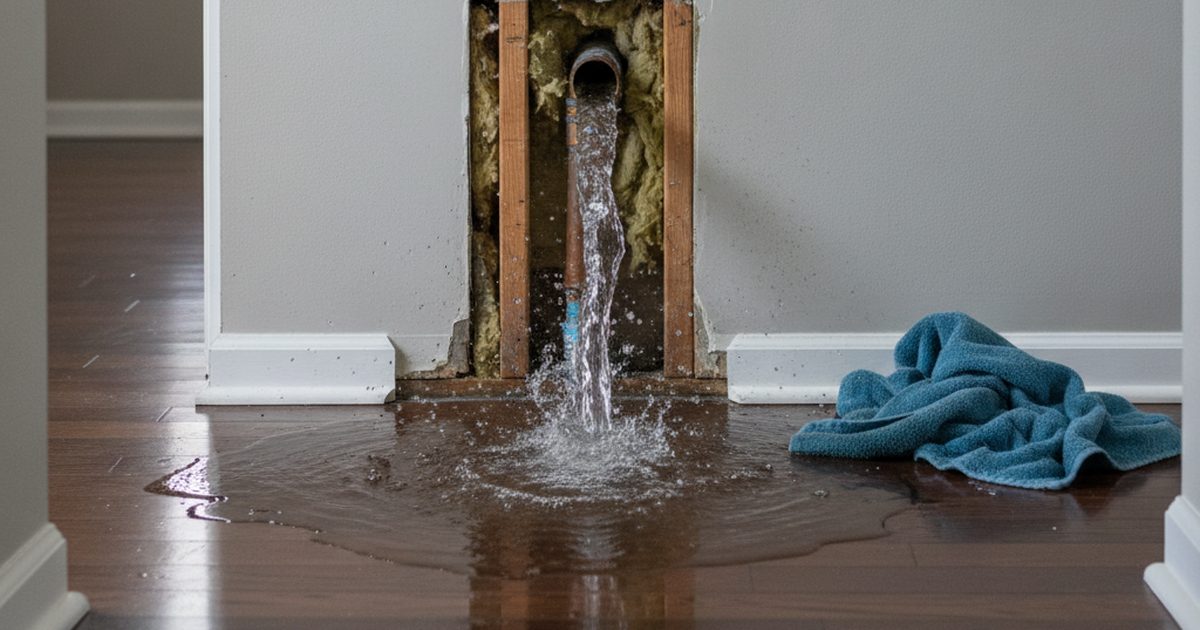
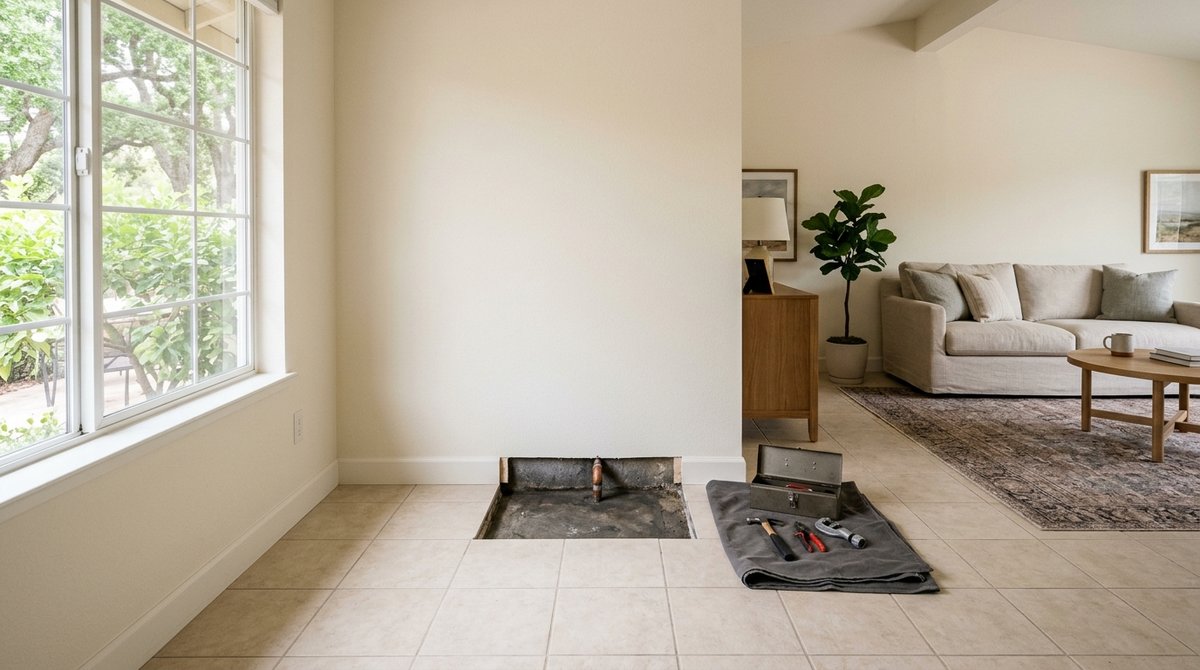
How a Slab Leak Is Found Before Anything Is Opened
Every slab leak repair starts with finding the leak. The pipes run inside or under the concrete foundation, so guessing means breaking concrete in the wrong place.
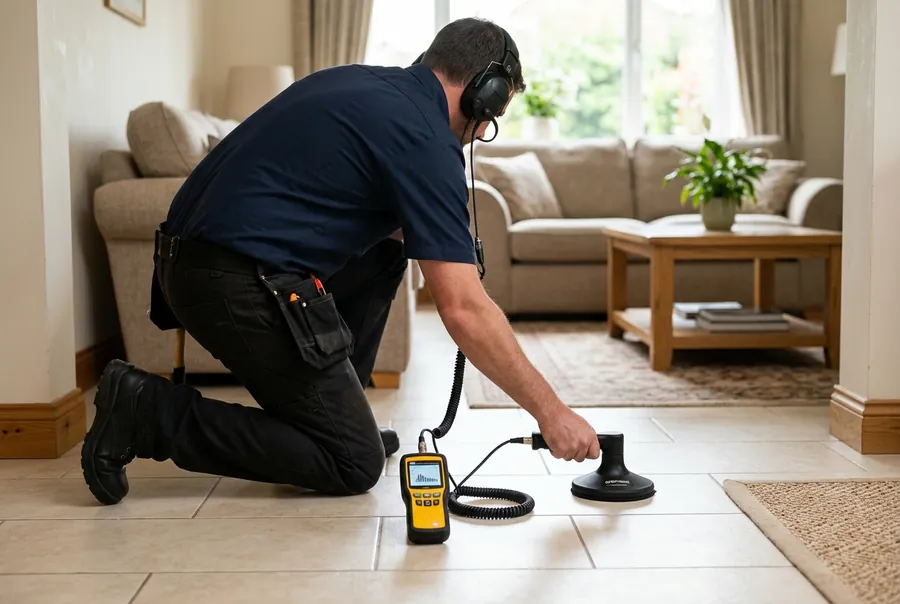
A licensed plumber uses electronic leak detection to narrow it down without opening the floor:
- 1Acoustic listening equipment picks up the high-pitched sound of water escaping a pressurized pipe through the concrete.
- 2Thermal imaging shows warm patches on the floor when the leak is on a hot water line.
- 3Pressure testing isolates the hot and cold sides of the system to confirm which line is leaking.
Detection usually takes one to two hours. At the end of it you should know where the leak is, which line it is on, and roughly how much flooring sits on top of it.
Those three facts drive the choice between the repair options below.
If you are not yet sure you have a slab leak, our guide to the warning signs of a slab leak covers what to look for first, from warm spots on the floor to the sound of running water with
every fixture off.
Option 1: Spot Repair Through the Slab
A spot repair, sometimes called direct access, goes straight to the leak.
The plumber cuts a small opening in the flooring and the concrete above the leak, exposes the damaged section of pipe, cuts it out and joins in a new piece.
The line is pressure-tested, then the opening is filled with new concrete and left ready for the flooring to be patched.
A spot repair usually makes sense when:
- 1There is one leak and the rest of the pipe is in good condition.
- 2The pipe is relatively young, and this is the first leak the home has had.
- 3The leak sits under an easy floor, such as a garage, a closet, a utility room, or carpet that can be pulled back and re-laid.
When the leak is easy to reach, a spot repair can often be finished in a single day. The trade-off is the floor itself.
Breaking concrete is labor-intensive, and if the leak sits under tile, hardwood or kitchen cabinets, the flooring repair afterwards can cost as much as the plumbing.
Option 2: Rerouting the Line Through the Walls or Attic
A reroute takes a different approach.
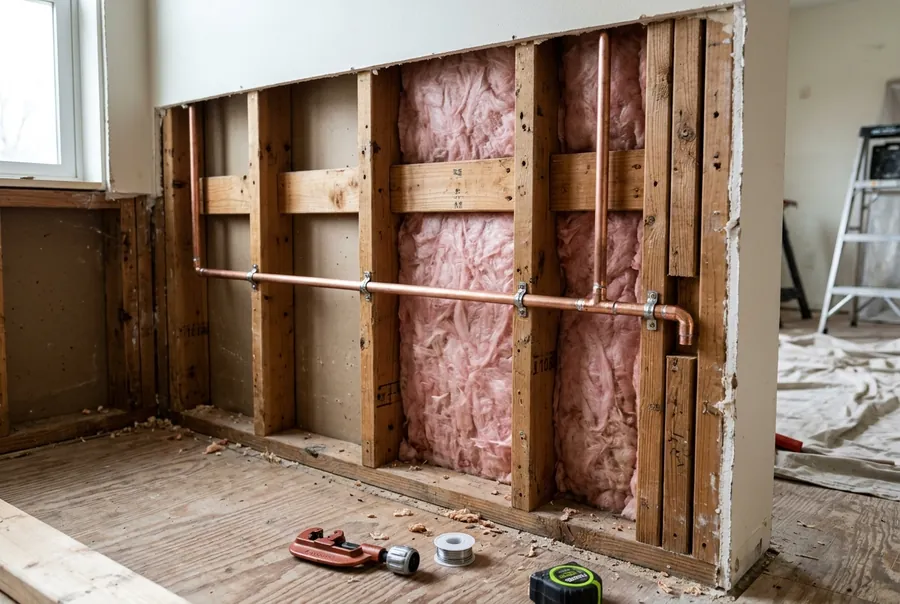
Instead of opening the slab, the plumber leaves the leaking section in place, shuts it off, and runs a new line above the floor, through the walls, the ceiling or the attic, to the fixtures that line served.
The old pipe under the slab is simply abandoned.
Rerouting usually makes sense when:
- 1The pipe is older or has leaked before. A second leak on the same run is a sign that more are coming, and every spot repair means opening the floor again.
- 2The leak is under finished flooring that would be expensive to break and replace.
- 3You want the problem gone from under the slab for good, rather than repaired one leak at a time.
A reroute involves more new piping than a spot repair and usually takes two to three days so the new lines can be installed and tied into the existing system.
Some drywall gets opened along the way, but patching drywall is usually simpler and cheaper than breaking up and re-laying a tiled floor.
Spot Repair vs. Reroute at a Glance
- 1Best for: a spot repair suits one leak on sound pipe. A reroute suits older pipe or repeat leaks.
- 2What gets opened: a spot repair opens a small section of floor and concrete. A reroute opens sections of wall, ceiling or attic.
- 3Typical time: a spot repair is often finished in one day. A reroute usually takes two to three days.
- 4Risk of another leak: after a spot repair the rest of the old pipe stays in service and can still leak. A reroute takes the bypassed section out of service.
- 5Main cost driver: concrete work and flooring repair for a spot repair. The length of new pipe and drywall patching for a reroute.
Neither option is right for every home. Ask for both to be explained against your home's pipe age, leak history and flooring before you approve the work.
Why Slab Leaks Happen in Vacaville and Solano County
Slab leaks have a few common causes, and most of them apply in Solano County:
- 1Shifting clay soil. Much of Solano County, Vacaville included, sits on clay-heavy soil that swells when it is wet and shrinks when it dries. Our wet winters and long, hot summers move the ground under a foundation every year, and that movement stresses the pipes inside the slab.
- 2Pipe rubbing against concrete or gravel. Pipes expand and contract as hot water runs through them. Over years, that small movement can wear through the pipe wall where it touches concrete or stone.
- 3Water chemistry and age. Copper pipes can thin from the inside over decades, so older homes are more likely to see a second leak after the first.
This is why pipe age and leak history matter so much in the choice. If the first leak came from soil movement or wear that affects the whole run, a reroute is often the more permanent answer.
What Affects the Cost of Slab Leak Repair
Every slab leak repair is priced after detection, because the main cost drivers depend on the home:
- 1Where the leak is, and whether it can be reached through a garage or closet floor or sits under tile, hardwood or cabinets.
- 2The repair method: concrete work and flooring for a spot repair, the length of new pipe and the wall openings for a reroute.
- 3Whether the leak is on the hot or cold line, and how many fixtures that line serves.
- 4Water damage already done, such as wet subfloor, baseboards or drywall, which may need drying and repair.
- 5Flooring repair, which is usually a separate trade and is often the cost homeowners overlook.
Check your homeowner's insurance early. Policies vary, but many cover the water damage and the cost of accessing the leak, such as breaking the concrete, while the plumbing repair itself is often not covered.
Your insurer can tell you what your policy includes.
Hidden Leaks Cost More the Longer They Run
A slab leak rarely fixes itself and is easy to miss.
According to the EPA's WaterSense program, the average household's leaks can account for more than 9,300 gallons of water wasted every year, and nine percent of homes have leaks that waste 50 gallons or more per day.
A leak under the slab can run for weeks before it shows as a warm spot, a damp floor or a rising water bill.
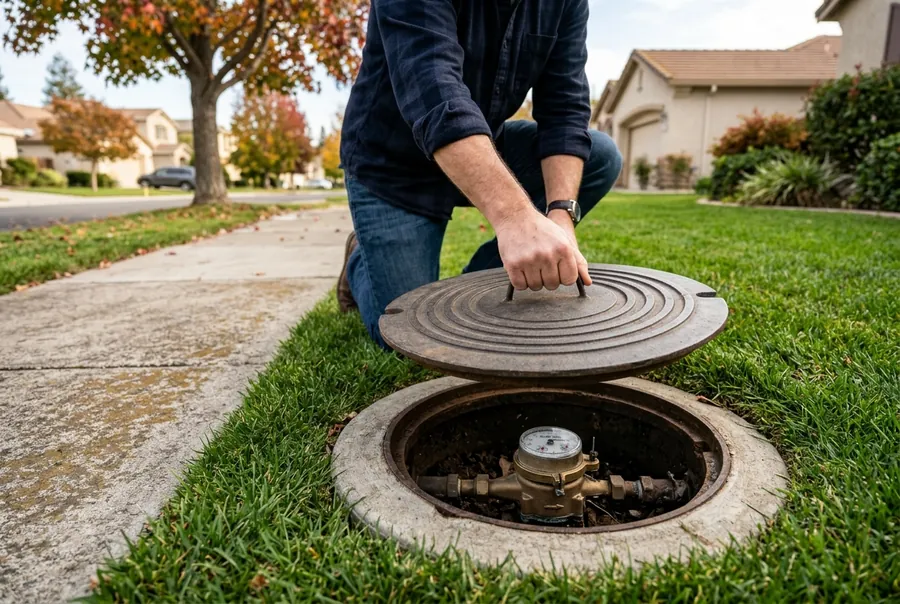
You can do a quick check before you call. WaterSense suggests reading your water meter before and after a two-hour period when no water is being used.
If the meter moves at all, you probably have a leak somewhere, and a slab leak is one of the possibilities worth ruling out.
What to Do While You Wait for a Plumber
If you suspect a slab leak, a few steps limit the damage:
- 1Turn off the water at the main shutoff valve if water is coming up through the floor or the leak is large.
- 2Turn off the water heater if the warm spot suggests a hot water line, so it is not heating water that is draining away.
- 3Move rugs and furniture off damp areas and keep the area dry.
- 4Take photos of warm spots, damp flooring and any cracks, which helps both the plumber and an insurance claim.
Slab Leak Repair in Vacaville
C&C Plumbing finds and repairs slab leaks across Vacaville, Fairfield and the rest of Solano County.
We locate the leak with non-invasive detection first, explain whether a spot repair or a reroute makes more sense for your home, and give you a free, upfront estimate before any concrete or drywall is opened.
Same-day service, 24/7 emergency response and financing are available. See our slab leak repair service or slab leak repair in Vacaville for how we handle these jobs locally.
If your leak turns out to be on the line between the meter and the house instead, our guide to repairing or replacing a water line in Vacaville covers that decision.
C&C Plumbing is licensed and insured under California contractor license 982867 and has served Solano County since 2013. The leak figures and meter check in this article come from the EPA WaterSense Fix a Leak Week page.