Start With the Water Meter Test
Before anyone opens a wall, check whether you have a leak at all. It takes about an hour and costs nothing:
- 1Turn off every faucet and water-using appliance in the house, including the irrigation controller and the ice maker.
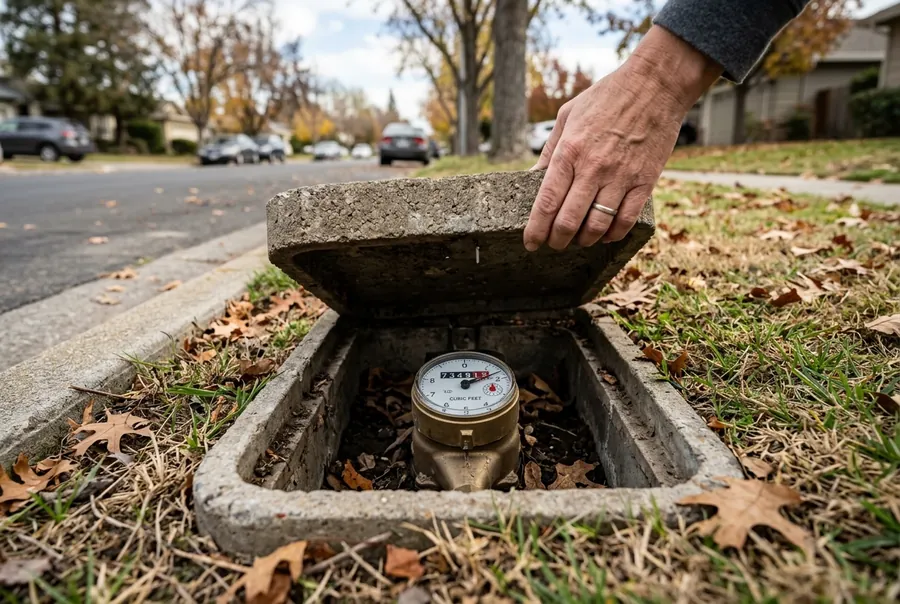
- 2Find the water meter, usually in a concrete box near the curb, and note the reading or watch the small leak indicator on the dial.
- 3Wait an hour without using any water, then read it again.
If the meter moved or the leak indicator is spinning, water is escaping somewhere between the meter and your fixtures. A slowly rising water bill with no change in how your household uses water points the same way.
Leaks are easy to miss because most of them are small. The U.S. Environmental Protection Agency's WaterSense program puts the waste from household leaks at nearly 10,000 gallons of water a year in the average home.
A lot of that comes from fixtures you can see. The expensive ones are the leaks you can't.
Where Leaks Hide in Vallejo Homes
Vallejo's housing covers a wide range of ages, from older homes near downtown and on the hills above the Carquinez Strait to newer subdivisions in Hiddenbrooke. The age of the plumbing shapes where leaks show up:
- 1Fixtures and toilets. Worn faucet cartridges, a running toilet flapper or a loose supply line under a sink. These are the most common and the cheapest to fix.
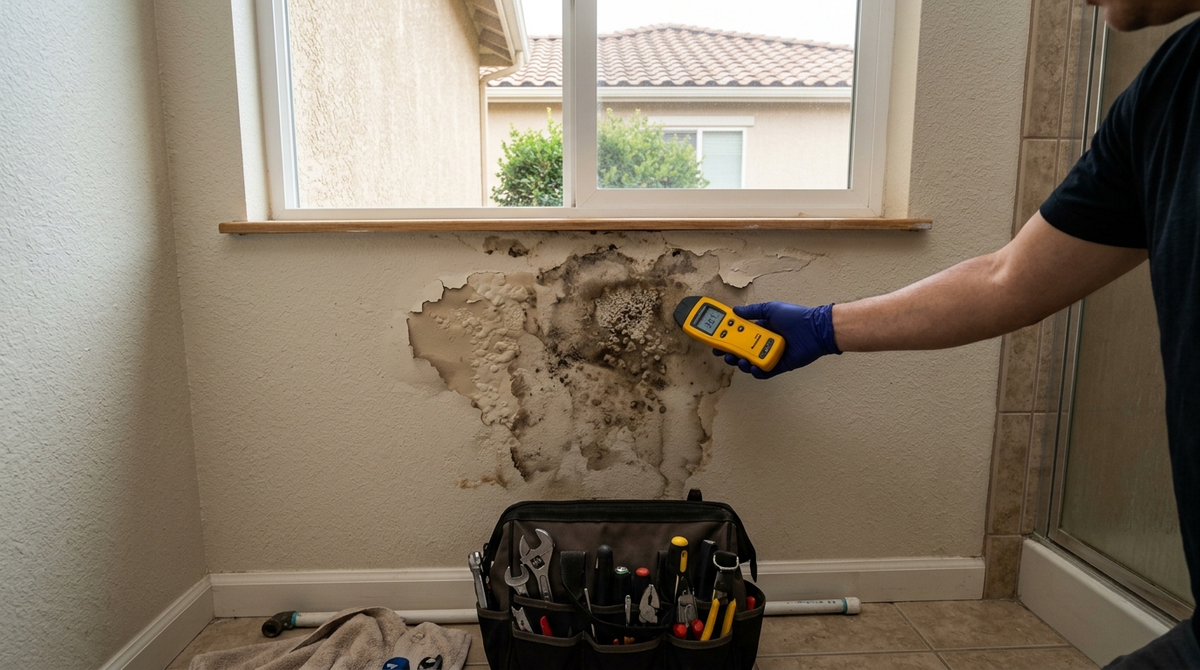
- 2Supply lines inside walls and ceilings. Pinholes in older copper, corroded galvanized steel in homes that have never been repiped, and failed fittings behind showers. Signs include stains, bubbling paint, a musty smell or a warm spot on the wall.
- 3The main water line in the yard. A line that runs from the meter to the house can crack from age, root pressure or ground movement. Look for a soggy patch of lawn that never dries, low pressure through the whole house or water pooling near the meter box.
- 4Under the slab. In slab-on-grade homes, a leak in the pipes under the foundation can show up as a warm spot on the floor, damp carpet, cracks in flooring or the sound of running water when everything is off.
How a Plumber Finds a Hidden Leak
Guessing is what makes leak repair expensive. Opening the wrong section of drywall or digging the wrong part of the yard adds cost without fixing anything. A careful diagnosis usually follows this order:
- 1Isolate the system. The plumber shuts off sections of the plumbing, such as the house side versus the yard side, or hot versus cold, to see which part loses pressure.
- 2Pressure test. A gauge on the line shows whether pressure drops over time with every fixture off, which confirms a leak in that section.
- 3Listen for it. Acoustic leak detection picks up the sound of water escaping a pressurized pipe through the floor, wall or soil.
- 4Look for heat and moisture. A thermal camera can trace a hot water line under a floor or behind a wall, and a moisture meter shows how far water has spread.
The goal is to mark the leak to within a small area before anything is opened. When a plumber can tell you where the leak is and why it happened, the repair quote is far more reliable.
Repair Options by Type of Leak
Once the leak is found, the right repair depends on where it is and the condition of the pipe around it.
Fixture and under-sink leaks are usually repaired on the first visit: a new cartridge, washer, supply line or toilet part, then a check that nothing else is dripping.
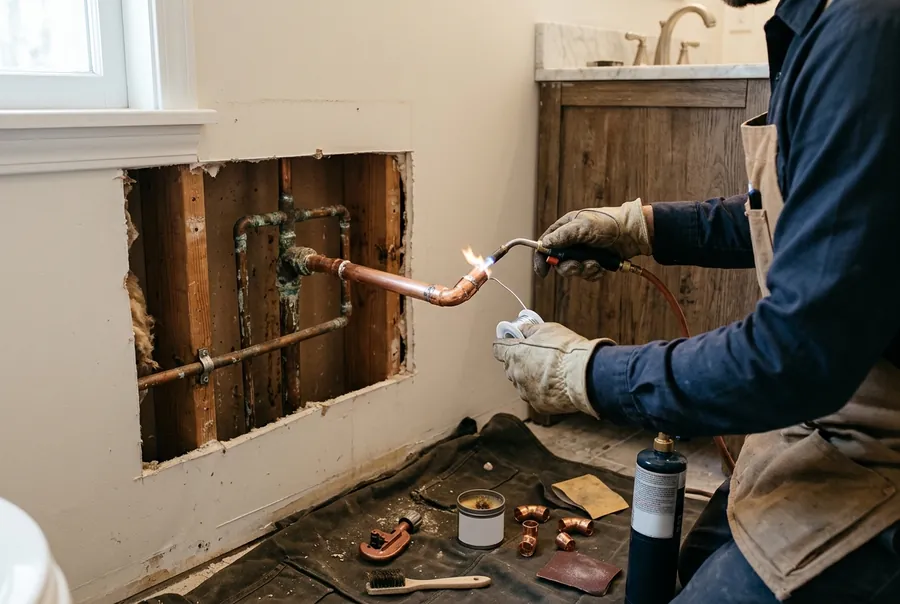
A leak inside a wall is repaired by opening a small, targeted section, cutting out the damaged pipe and joining in new pipe.
If the pipe around it is thin or heavily corroded, ask whether a longer section, or that whole run, should be replaced so you are not opening the same wall again next year.
A main water line leak can be a spot repair when the rest of the line is in good shape, or a replacement when the line is old, has leaked before or is a material that keeps failing.
Our guide on repairing or replacing a main water line covers how to decide.
A slab leak can be repaired by opening the floor at the leak, by rerouting the line through the walls or attic, or by repiping when the pipes under the slab keep failing.
Our guide to slab leak warning signs explains the symptoms in more detail.
What to Ask Before You Hire a Plumber for Leak Repair
When you call around, these questions separate a careful contractor from a quick patch:
- 1Are you licensed in California? Check the license number on the Contractors State License Board website. C&C Plumbing works under CA license 982867.
- 2How will you find the leak before opening anything? Ask what testing they use and how they confirm the location.
- 3What does the estimate include? It should name the leak location, the repair method, the materials and whether opening and patching access holes is part of the job.
- 4Is this a repair or a replacement recommendation, and why? A plumber should be able to explain the condition of the pipe on either side of the leak.
- 5Will you test the system after the repair? A pressure test after the work is the only way to know the leak is gone.
When a Leak Is an Emergency
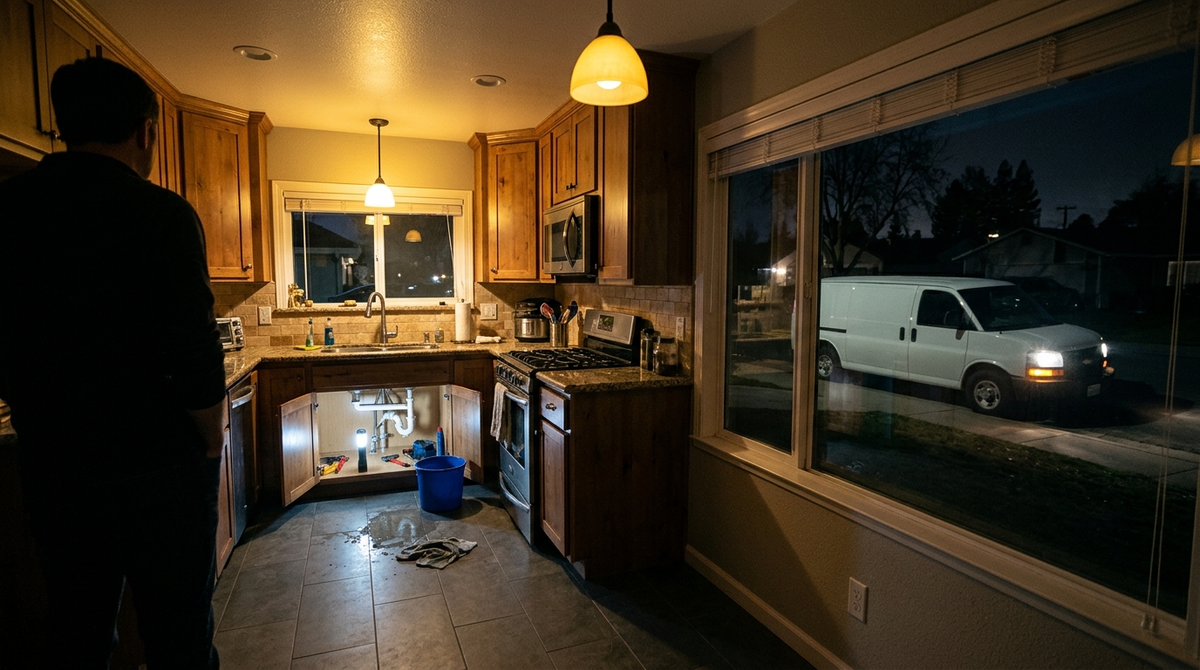
Shut off the water at the main valve and call right away if water is spraying, a ceiling is sagging or dripping, water is reaching electrical outlets or fixtures, or you cannot stop the flow at the fixture.
If you are not sure where your main shutoff is, our post on what to do when a pipe bursts shows how to find it and what to do in the first few minutes.
A slow leak that you can isolate can usually wait for a scheduled visit, but don't let it run for weeks: water inside walls and floors keeps spreading and can lead to mold and rot.
Plumbing Leak Repair in Vallejo
C&C Plumbing finds and repairs leaks in homes across Vallejo, including Glen Cove, Hiddenbrooke, Mare Island and Somerset Highlands, as well as Benicia, American Canyon and nearby communities.
We locate the leak first, explain what failed and give you a free, upfront estimate before any work starts. Same-day service is available when scheduling allows, and we answer 24/7 for leaks that can't wait.
See our general plumbing services in Vallejo, slab leak repair in Vallejo or main water line repair in Vallejo, find a plumber in Vallejo, or call us at (707) 434-1355.
C&C Plumbing is licensed and insured under California contractor license 982867 and has served Solano County since 2013. The household leak estimate comes from the EPA WaterSense Fix a Leak Week announcement.