Why the Drain Cleaner Didn't Work
Most bathtub clogs are a mat of hair bound together with soap scum, sitting in the drain or just past it. Chemical drain cleaners work by reacting with that material and generating heat.
Three things often go wrong in a tub:
- 1The clog is mostly hair. Hair is tough, and a caustic cleaner often burns a small channel through the middle rather than dissolving the whole mass. Water may trickle through for a while, then the drain slows again.
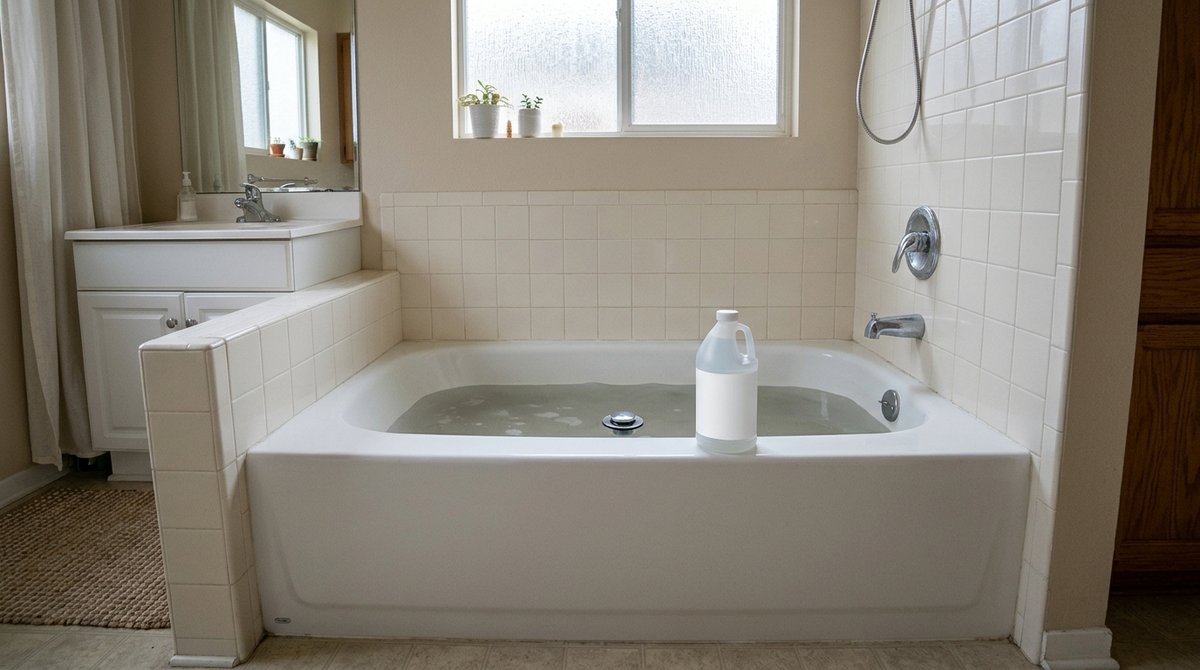
- 2The product never reached the clog. If the tub was already full of standing water, the cleaner was diluted before it got to the blockage.
- 3The blockage is further down the line. If the problem is in the branch line or the main sewer, no amount of product poured into the tub will reach it.
That last one matters. If the tub backs up when you flush a toilet or run the washing machine, the clog is probably not in the tub at all.
That points to a main line problem, which is a job for a plumber, not a bottle.
What Not to Do With Treated Water in the Tub
Once a drain cleaner has gone in, the standing water in your tub is no longer just dirty water. Avoid these common mistakes:
- 1Don't add a second product. Mixing drain cleaners, or adding bleach or another household cleaner on top, can cause a violent reaction and release harmful gases.
- 2Don't plunge. Plunging forces treated water back up and out of the drain and overflow, and it can splash onto your face, arms and the tub surround.
- 3Don't put your hand in the water or reach into the drain to pull out the stopper without heavy rubber gloves and eye protection.
- 4Don't use a hand snake on treated water yourself. The cable flicks liquid as it turns and comes out coated in the product.
MedlinePlus, the U.S. National Library of Medicine's health site, lists sodium hydroxide, found in some drain cleaners, as a poisonous ingredient.
If any gets on your skin or in your eyes, it advises flushing with at least 2 quarts of water for at least 15 minutes, and calling the national Poison Help line at 1-800-222-1222 or 911.
Keep the product's container so you can tell them exactly what it was.
What Is Safe to Do While You Wait
You can make the situation safer and set the plumber up for a quicker job:
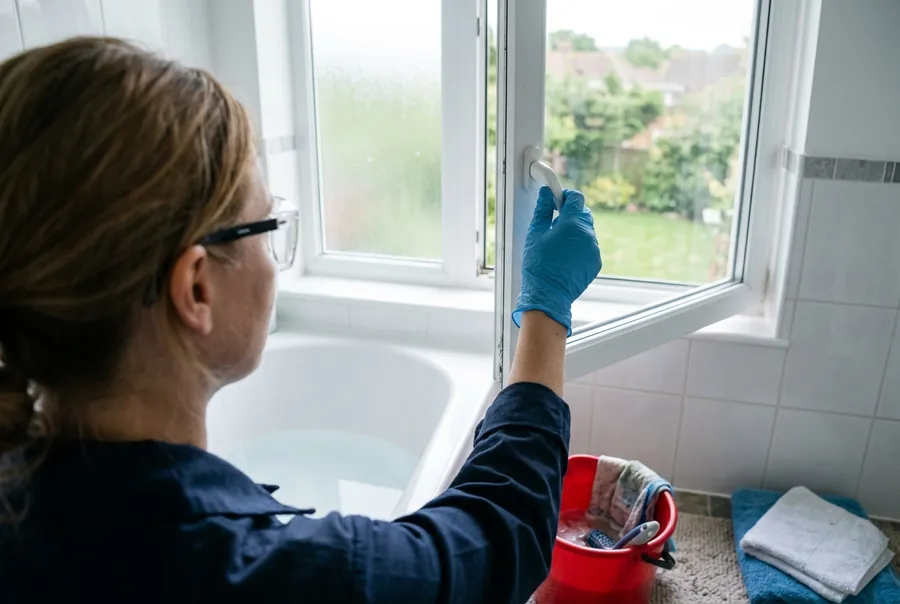
- 1Ventilate the room. Open a window and run the exhaust fan.
- 2Keep children and pets out of the bathroom until the drain is cleared.
- 3Stop using the tub and shower, and the sink on the same side of the house if it is draining slowly too.
- 4Keep the product container and note how much you used and when.
- 5Give it time. Some products say to wait before flushing with water. Follow the label, but don't keep adding product if nothing has changed.
If the water drains away on its own after the waiting time, run plenty of cold water to rinse the line. If it is still standing, leave it and call.
How a Plumber Clears a Tub Clog After Chemicals
Telling the plumber which cleaner you used is the most useful thing you can do.
It changes how they set up: they wear protective gear, may neutralize or remove the treated water first, and take care with older metal traps and drain parts that caustic products can damage.
From there, clearing the drain is a mechanical job:
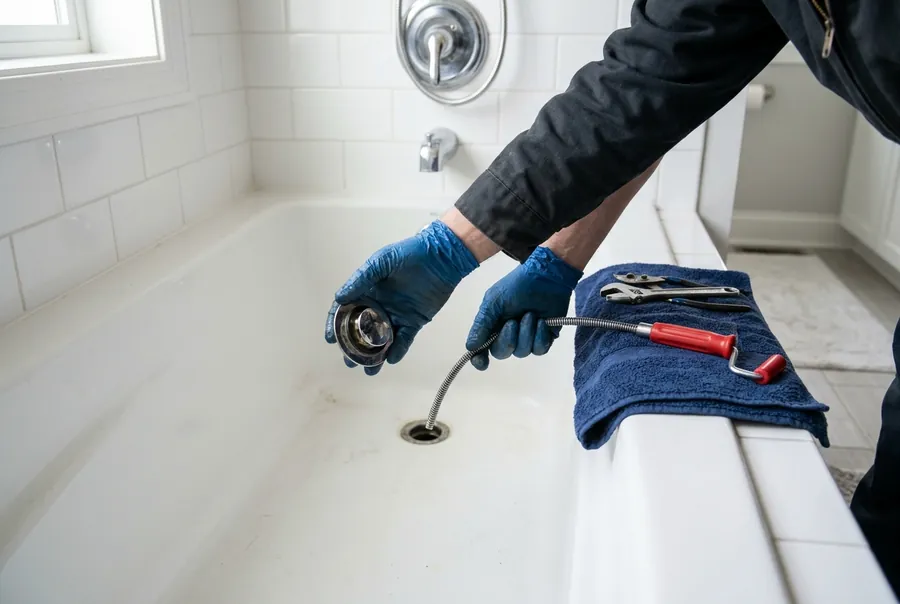
- 1Remove the stopper and overflow plate to reach the drain directly.
- 2Pull the hair mat out from the drain opening, which often clears a simple tub clog on its own.
- 3Run a drain auger (snake) through the tub drain or overflow to break up and retrieve whatever is further down.
- 4Inspect the line with a camera if the clog keeps coming back or other fixtures are involved, to see whether the problem is in the branch line or the main sewer.
- 5Flow test the tub once it is clear, so you know it drains properly before the plumber leaves.
Most standard drain cleaning jobs, such as a backed-up tub or shower, are finished in one to two hours. Heavy buildup further down the line can take longer.
Signs the Problem Is Bigger Than the Tub
A single slow tub is usually a local hair clog. Call sooner rather than later if you notice:
- 1The tub backs up when a toilet is flushed or the washing machine drains.
- 2Several drains are slow at once, or drains on the lowest level of the house are affected first.
- 3Gurgling from the tub drain or a nearby toilet.
- 4A sewage smell from the drain.
- 5The tub clogs again within weeks of being cleared.
These point to a blockage in the branch line or the main sewer line, and they need more than a tub snake.
Our guide on why drains keep clogging explains what builds up inside the pipes, and if a camera inspection shows the main line is damaged, our sewer line repair and replacement page covers what comes next.
Keeping the Tub Draining After It Is Cleared
Most repeat tub clogs are preventable:
- 1Fit a hair catcher over the drain and empty it after every few showers.
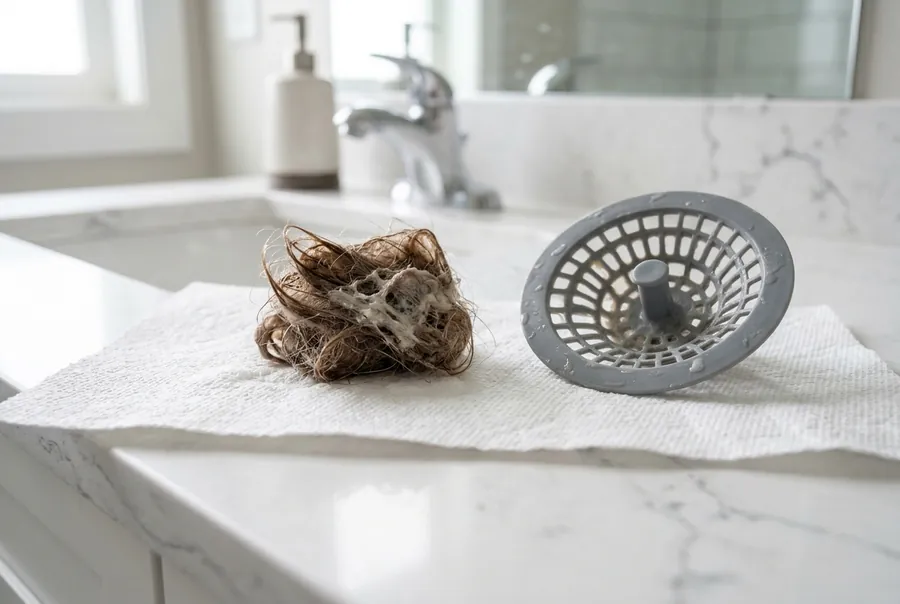
- 2Clean the stopper once a month. Hair wraps around the stopper's post and builds into the next clog.
- 3Run hot water for a minute after baths to rinse soap scum through.
- 4Skip the chemical cleaners. Our drain cleaning team advises against them because they can warp PVC and corrode older metal pipes, and they often leave most of the clog behind. A hair catcher and a yearly cleaning do more.
Drain Cleaning in Fairfield
C&C Plumbing clears bathtub, shower and sink clogs across Fairfield, Suisun City, Vacaville and the rest of Solano County, including drains that have already been treated with chemicals.
We clear the line mechanically, use a camera when a clog keeps coming back, and give you a free, upfront estimate before work starts. Same-day service and 24/7 emergency response are available.
See our drain cleaning services or drain cleaning in Fairfield for how we handle these calls locally.
C&C Plumbing is licensed and insured under California contractor license 982867 and has served Solano County since 2013. The safety guidance on sodium hydroxide comes from MedlinePlus.