Signs Your Sewer Line Needs More Than a Cleaning
Most sewer problems start as a clog, and a cleaning clears them. These signs suggest the pipe itself is failing:
- Backups that keep coming back a few weeks or months after the line is cleared. - Several drains slowing down at once, especially the lowest tub, shower and toilet in the house.
- Gurgling from a toilet or floor drain when the washing machine or a tub drains. - Wet, sunken or unusually green patches in the yard along the line's path.
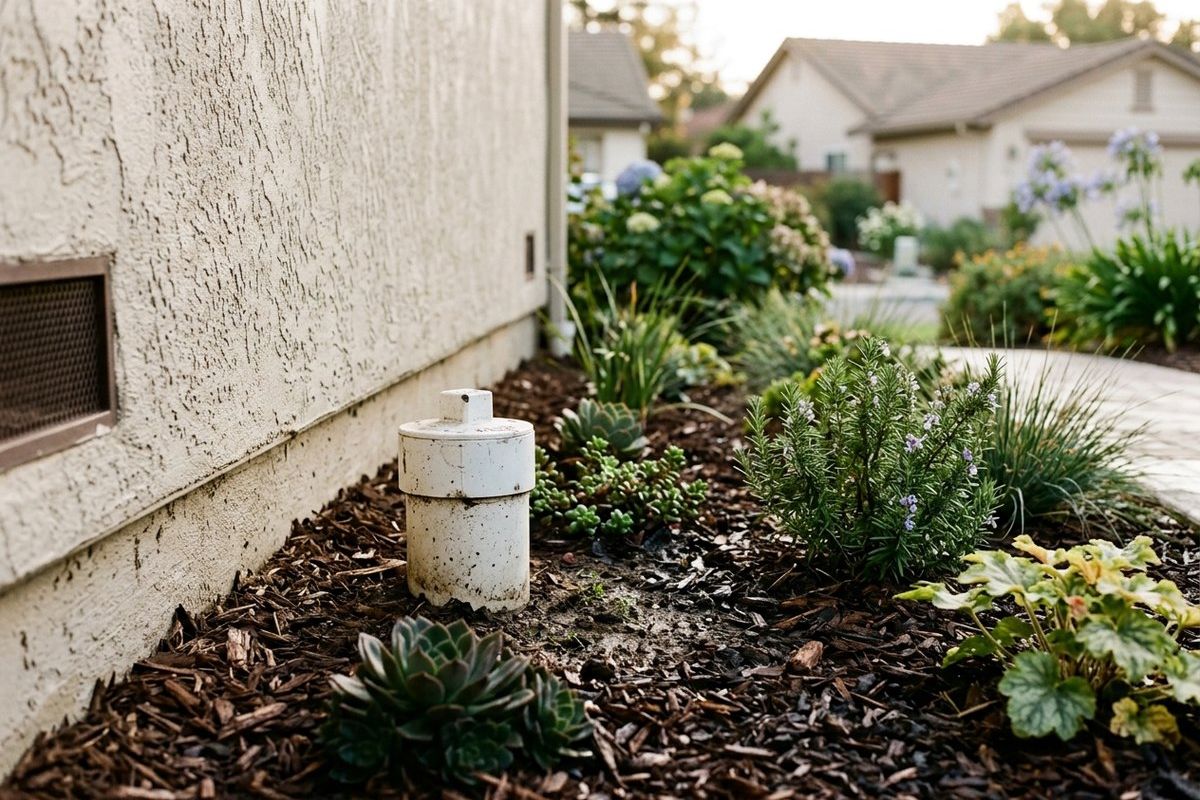
- A sewage smell outside near the cleanout, or inside with no obvious source.
In older Fairfield neighborhoods, many sewer laterals are clay or cast iron, and tree roots find their way into the joints during long dry summers. Once a root mat or a cracked joint keeps catching waste, cleaning only buys time.
Start With a Camera Inspection
Neither method should be chosen without looking inside the pipe.
A plumber runs a waterproof camera through the cleanout and records the whole line: where the roots are, whether joints have separated, whether a section has sagged and holds water, and whether any part has collapsed.
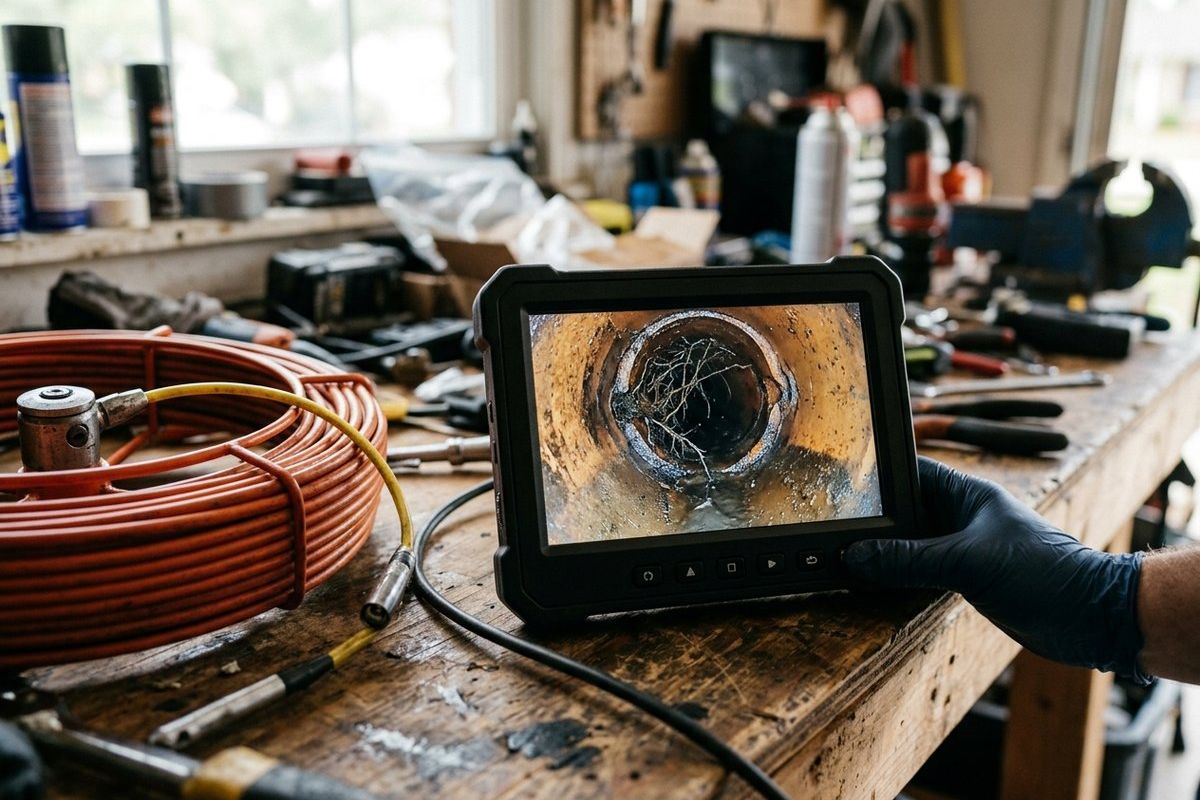
That footage answers the real question: is this a repair in one spot, or a replacement of the whole run, and can the old pipe be used as the path for the new one?
How Trenchless Sewer Line Replacement Works
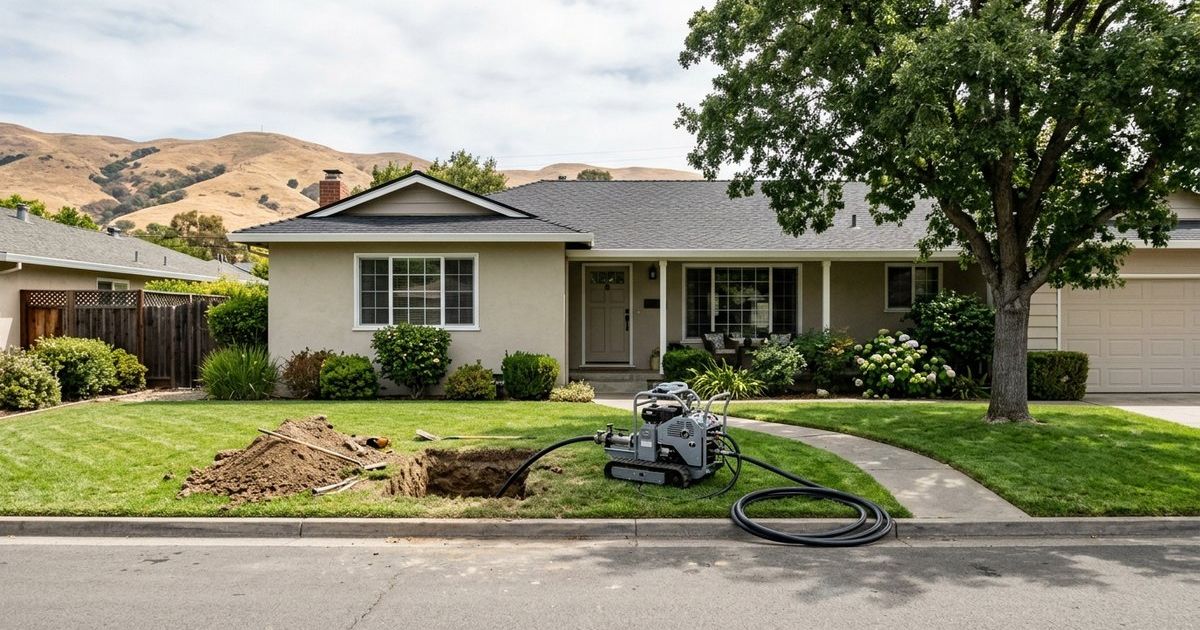
Trenchless methods use the existing pipe as the route for the new line. The two most common approaches for a home sewer lateral are:
- Pipe bursting. A bursting head is pulled through the old pipe, breaking it outward while a new seamless plastic (HDPE) pipe is pulled in behind it.
- Pipe lining. A resin-soaked liner is inserted into the cleaned pipe and cured in place, forming a new pipe inside the old one.
According to the U.S.
Environmental Protection Agency's fact sheet on pipe bursting, trenchless methods can work through existing openings or "smaller insertion pits, rather than through excavation along the entire length of pipe," which means less disturbance and less restoration afterwards than dig-and-replace.
The same fact sheet is clear about the limits: pipe bursting can run into trouble with expansive soils, other service lines close by, or a pipe that has collapsed along its length.
How Traditional Sewer Line Replacement Works
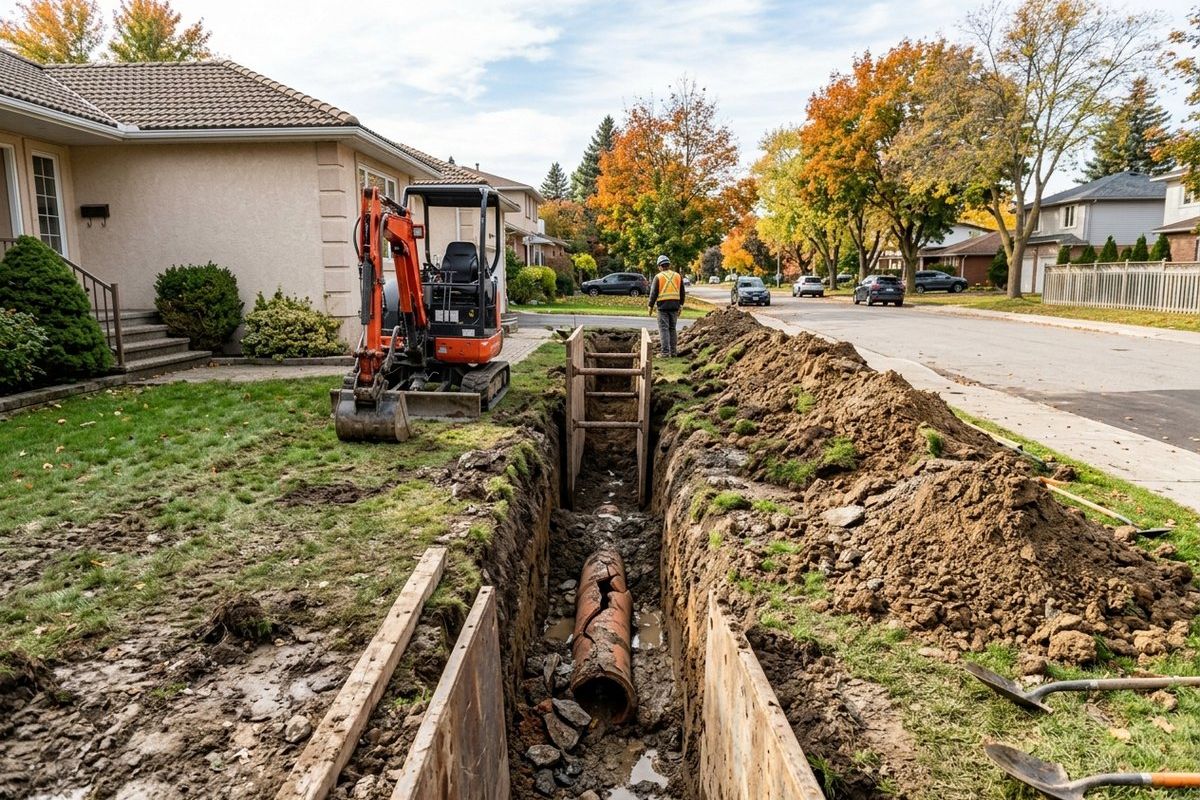
Traditional replacement digs a trench from the house to the connection point, removes the old pipe, lays new pipe at the correct slope, and backfills. It takes more restoration, but it can handle anything:
- A collapsed section that a bursting head or liner cannot get through. - A badly sagging line that needs its slope corrected. A liner follows the old pipe, sag and all.
- Crowded utility corridors, where gas, water or electrical lines sit close to the sewer. - Short, shallow runs under open lawn, where a trench is not much more work than access pits.
Which Costs More?
There is no single answer, because the price depends on the property:
- What sits above the line. Under a driveway, patio, mature tree or finished landscaping, trenchless often comes out ahead because there is little to tear out and rebuild.
- Length and depth of the line from the house to the city connection. - The condition of the old pipe, which decides whether trenchless is possible at all. - Permits and inspection, which a full replacement typically requires.
When comparing quotes, compare the full cost, including restoring the yard, concrete or landscaping. A traditional quote that looks lower can end up higher once the driveway has to be repoured.
Who Is Responsible for the Sewer Line?
The pipe running from your house to the public sewer main, called the sewer lateral, is generally the property owner's responsibility, at least up to the cleanout or property line.
Where exactly that line falls depends on the city, so if the break is near the street, it is worth confirming with City of Fairfield Public Works or Suisun City Public Works before work starts.
Sewer Line Replacement in Fairfield
C&C Plumbing inspects, repairs and replaces main sewer lines across Fairfield, Vacaville, Vallejo and the rest of Solano County.
We camera-inspect the line first, explain whether a spot repair, a trenchless replacement or a traditional replacement makes sense for your property, and give you a free estimate before any work starts.
Financing is available, and we answer sewer backups 24/7. See our main sewer line repair and replacement service or sewer line repair in Fairfield.
If your line is still flowing and you want to keep it that way, our guide to preventing main sewer line backups covers the habits that help.
C&C Plumbing is licensed and insured under California contractor license 982867 and has served Solano County since 2013. The trenchless method details in this article come from the EPA Water Technology Fact Sheet: Pipe Bursting.