When You Need a New Gas Line
Many homes in Vacaville already have gas piping to the water heater and the furnace, and many have it to the kitchen. A new line, or an extension of an existing one, comes up when you are:
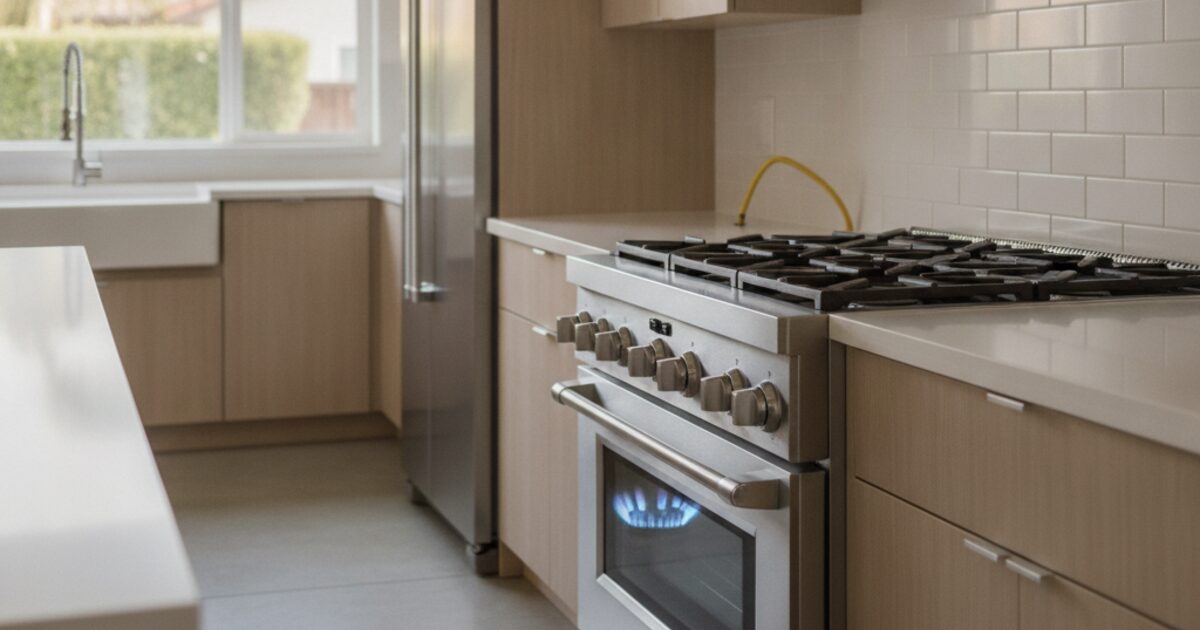
- 1Switching from an electric range to a gas range or cooktop, or moving the range to a new spot during a kitchen remodel.
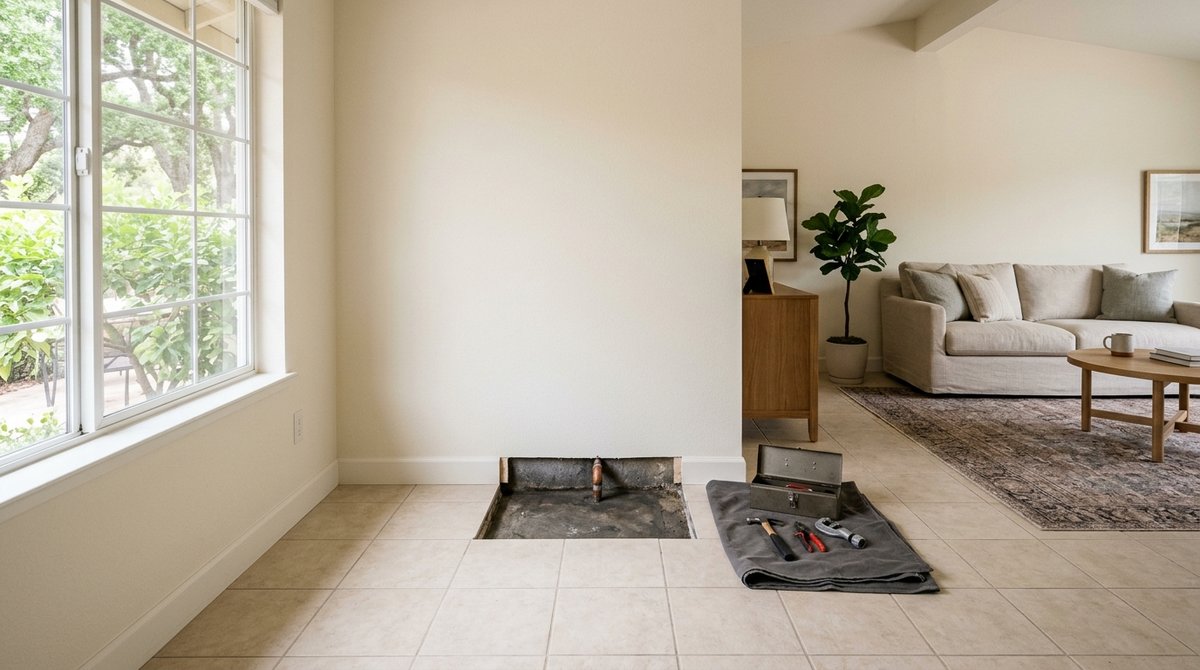
- 2Adding a gas dryer in a laundry room that has only ever had an electric hookup.
- 3Installing a new or larger water heater, including a tankless unit, which can need more gas than the old tank did.
- 4Building an outdoor kitchen, BBQ, fire pit or patio heater, which means running a line outside and often underground.
- 5Adding a pool or spa heater, usually the longest and largest run of all.
Each of these is a gas line installation, not a simple appliance swap. The new appliance has to get enough gas at the right pressure, and every new joint has to be proven leak-free.
Step 1: Sizing the Line for the Appliance
Gas appliances are rated in BTUs, the amount of heat they produce per hour.
A plumber adds up the BTU rating of the new appliance and everything else already running on the same piping, then sizes the new line for that total load and the length of the run.
This step is where most do-it-yourself and handyman gas work goes wrong. A line that is too small for the load starves the appliance of gas.
A range burner may not reach full flame, and a tankless water heater may shut down or deliver lukewarm water when another appliance is running.
An existing line that was sized years ago for a single water heater may not have room for a new range, a dryer and a BBQ on top of it.
Step 2: Routing the Pipe
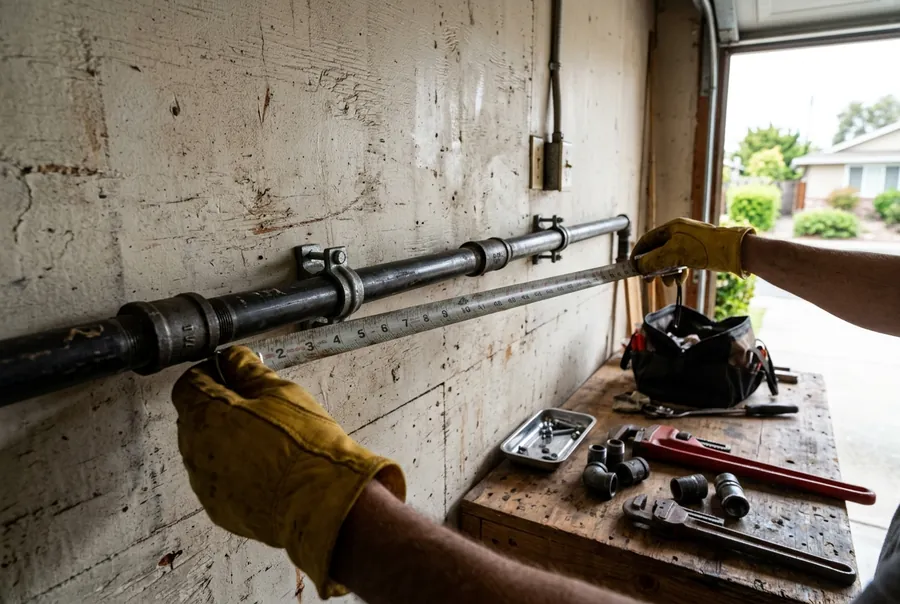
Once the size is set, the plumber plans the route from the existing gas piping to the new appliance. The goal is the shortest, safest path that can be inspected and maintained.
Indoor runs often pass through a crawlspace, the garage, an attic or along wall cavities. Common materials are black iron pipe and flexible corrugated stainless steel tubing, chosen for the application and the route.
The length of the run and how much wall or ceiling has to be opened are the biggest factors in how long the job takes.
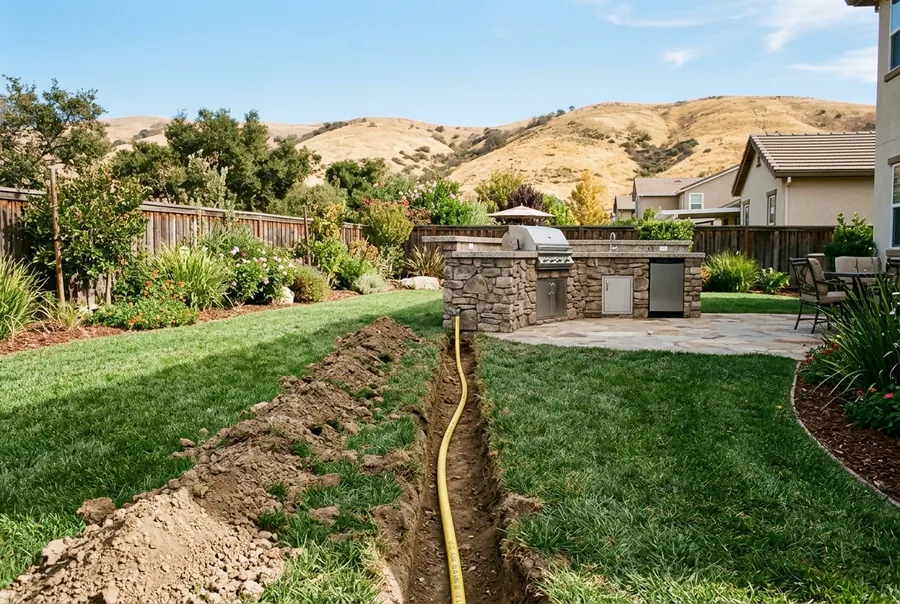
Outdoor runs to a BBQ, fire pit or pool heater are often buried. In California, anyone digging has to plan for buried utilities first.
According to USA North 811, the underground service alert for Northern California, "calling 811 before digging is a legal requirement," and all excavation requests need a minimum of two working days' notice before digging starts.
The service is free, and it marks the utilities' buried lines so the trench does not hit them.
It does not locate customer-owned piping, such as an existing line to a pool heater or detached garage, so the plumber traces those separately before digging.
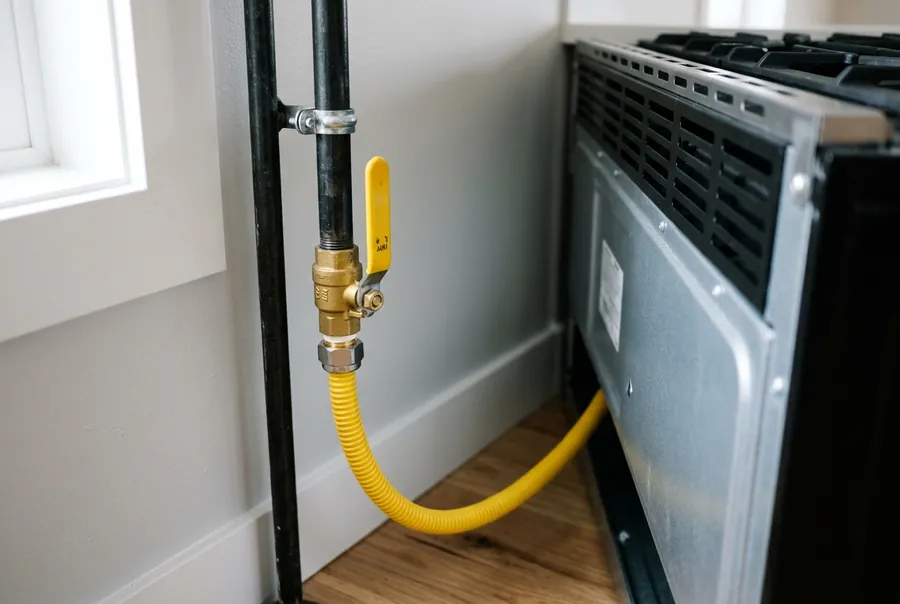
Step 3: A Shutoff Valve at the Appliance
Every gas appliance should be able to be shut off on its own, without cutting gas to the whole house.
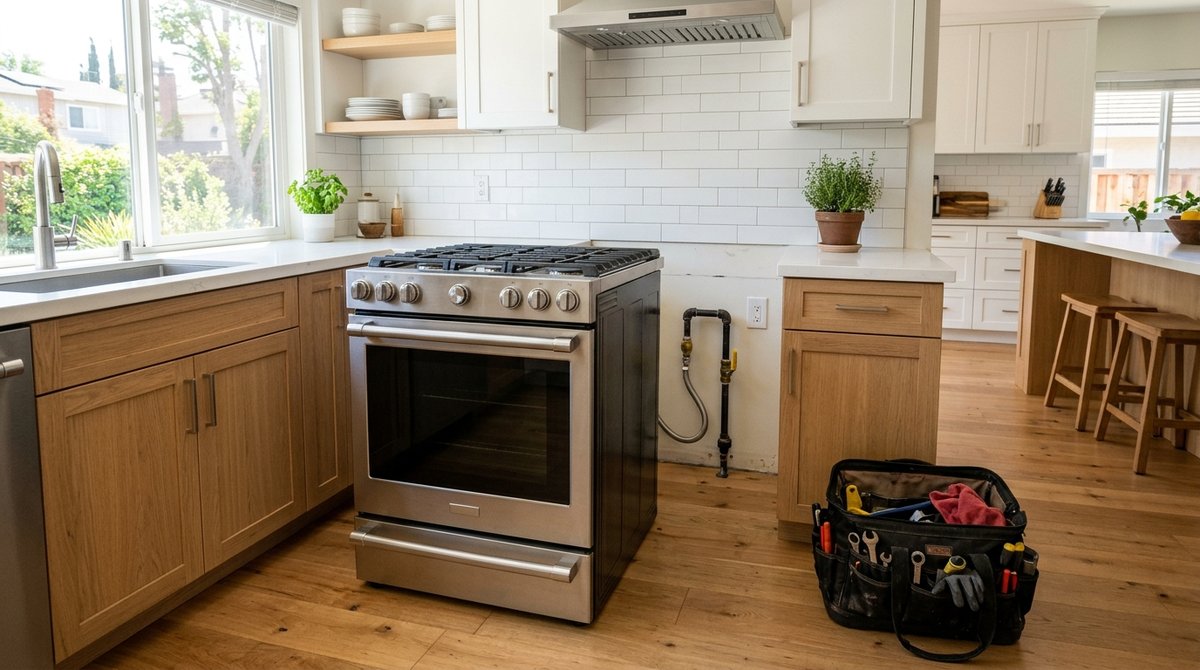
PG&E's gas safety guidance puts it plainly: "You should have an appliance gas shutoff valve installed at each gas appliance so that you can turn off the gas to that appliance only."
When a new line is installed, the plumber fits that valve where you can reach it, usually behind or beside the appliance, then connects the appliance to it.
If you ever need to move the range out to clean, or the appliance needs service, you can shut off just that one line.
Step 4: Permit, Pressure Test and Inspection
New gas piping normally needs a permit and an inspection from the local building department, so that the sizing, materials and connections meet the California codes.
C&C Plumbing handles the permit as part of the job, so you are not left chasing paperwork.
Before any gas is turned back on, the new line is pressure-tested. The line is capped and pressurized, then watched to confirm it holds pressure without dropping. A line that holds has no leaks.
Only then is the gas turned on, the air bled from the line, and the appliance lit and checked.
If you are replacing a water heater at the same time, that work usually needs a permit of its own, so ask for both to be planned together.
How Long It Takes
The time on site depends almost entirely on the route:
- 1A short indoor run for a range, dryer or water heater, with easy access through a garage or crawlspace, is usually a half day to a full day.
- 2A longer indoor run that has to pass through finished walls or ceilings can take longer, plus time to patch drywall.
- 3An outdoor buried line to a BBQ, fire pit or pool heater adds trenching and the 811 notice period before digging can start.
The inspection is scheduled with the city, so allow for the inspector's visit as well.
What Affects the Cost
Every gas line installation is priced on site. The main cost drivers are:
- 1Length of the run from the existing piping to the appliance.
- 2Pipe size, which goes up with the appliance's BTU load and the length of the run.
- 3Material used for the route.
- 4Access: an open garage or crawlspace is simpler than finished walls, tile or concrete.
- 5Trenching for outdoor lines, and what has to be dug through, such as lawn, pavers or concrete.
- 6Whether the existing line needs upsizing to carry the new appliance along with everything already on it.
- 7Permit and inspection fees.
A short indoor line to a new range is one of the simpler gas jobs. A long buried line to an outdoor kitchen or a pool heater is one of the larger ones.
Gas Safety Before and After the Install
Natural gas has an odorant added so leaks smell like rotten eggs. If you ever smell gas, leave the house right away, do not switch lights or appliances on or off, and call PG&E or 911 from outside.
Our guide to the signs of a gas leak in a Vacaville home covers what to look and listen for.
Never connect a new gas appliance yourself, and do not ask a handyman to extend a gas line. Gas line work needs a licensed plumbing contractor, the right tools to size and test the line, and a permit.
Gas Line Installation in Vacaville
C&C Plumbing installs, extends and repairs gas lines for ranges, dryers, water heaters, BBQs and fire pits across Vacaville, Fairfield and the rest of Solano County.
We size the line for your appliance, handle the permit, pressure-test every new line before the gas goes on, and give you a free, upfront estimate before any work starts. Financing is available for larger installations.
See our gas line repair and installation service or gas line installation in Vacaville for how we handle these jobs locally. Planning a new water heater as well? See our water heater replacement and installation service.
C&C Plumbing is licensed and insured under California contractor license 982867 and has served Solano County since 2013. The appliance shutoff valve guidance comes from PG&E's gas safety page, and the digging rule from USA North 811.